
Skip to Content
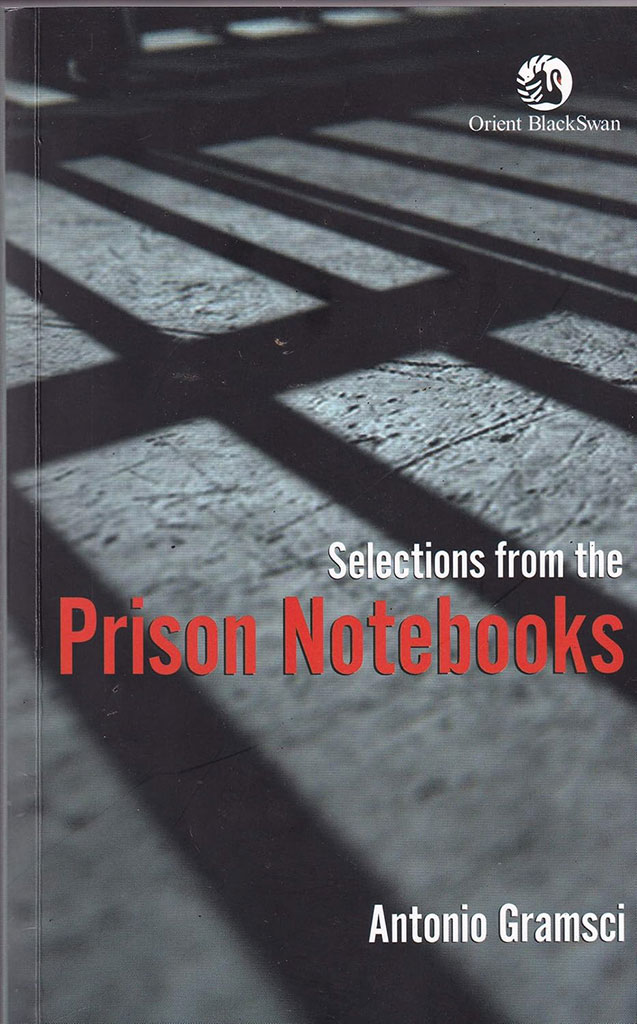
Selections From The Prison Notebooks

Price:

1,251.00 ৳


Selected Works of C. Rajagopalachari Vol. 1. II 1921-22
2,205.00 ৳
2,450.00 ৳ (10% OFF)
Self-Deception : Indias China Policies Origins, Premises, Lessons
1,080.00 ৳
1,200.00 ৳ (10% OFF)
10% OFF

Selections From The Prison Notebooks

One lets a man starve until he is fifty; when he is fifty, one finally notices him. In private life, such behaviour would warrant a good kicking. In the case of the state, it appears to be a “merit” (1933). Antonio Gramsci (1891–1937) even today, our states and their actors tell the same story. This explains the continued appeal of Antonio Gramsci prison notebooks for our cultural theorists and political commentators, including Raymond Williams, Stuart hall, Edward said, and Terry Eagleton, and the new left review contributors. Gramsci’s relentless conflict with alternative and opposition forces finds the most lucid and extended expression in his prison notebooks. Selections from the prison notebooks, translated, edited, and annotated helpfully in this edition, will make it easier for both the seasoned scholar and budding researcher who wish to study gramsci’s salient reflections and political observations. Gramsci’s major ideas and sketches of polemical thought have been ordered under larger units in this book. The introductory essay places the notebooks in their socio-historical background. The considerable range of their address and focus will inspire and challenge students who have only had limited access to gramscian terminology, such as hegemony, national-popular, subaltern, war of position, Organic intellectual, etc. This book is a precious resource for scholars and students from a wide range of disciplines, including anthropology, sociology, political Science, History, Geography, education, cultural studies and literary studies.
See More
https://pathakshamabesh.com/web/image/product.template/10533/image_1920?unique=e834cd8

1,251.00 ৳ 1251.0 BDT 1,390.00 ৳

Not Available For Sale

(10% OFF)

This combination does not exist.

One lets a man starve until he is fifty; when he is fifty, one finally notices him. In private life, such behaviour would warrant a good kicking. In the case of the state, it appears to be a “merit” (1933). Antonio Gramsci (1891–1937) even today, our states and their actors tell the same story. This explains the continued appeal of Antonio Gramsci prison notebooks for our cultural theorists and political commentators, including Raymond Williams, Stuart hall, Edward said, and Terry Eagleton, and the new left review contributors. Gramsci’s relentless conflict with alternative and opposition forces finds the most lucid and extended expression in his prison notebooks. Selections from the prison notebooks, translated, edited, and annotated helpfully in this edition, will make it easier for both the seasoned scholar and budding researcher who wish to study gramsci’s salient reflections and political observations. Gramsci’s major ideas and sketches of polemical thought have been ordered under larger units in this book. The introductory essay places the notebooks in their socio-historical background. The considerable range of their address and focus will inspire and challenge students who have only had limited access to gramscian terminology, such as hegemony, national-popular, subaltern, war of position, Organic intellectual, etc. This book is a precious resource for scholars and students from a wide range of disciplines, including anthropology, sociology, political Science, History, Geography, education, cultural studies and literary studies.

Antonio Gramsci

Antonio Gramsci (22 January 1891 – 27 April 1937) was an Italian Marxist philosopher, journalist, linguist, writer, and politician. He wrote on philosophy, political theory, sociology, history, and linguistics. He was a founding member and one-time leader of the Communist Party of Italy and was imprisoned by Benito Mussolini's Fascist regime. Gramsci wrote more than 30 notebooks and 3,000 pages of history and analysis during his imprisonment. His Prison Notebooks are considered a highly original contribution to 20th-century political theory. Gramsci drew insights from varying sources – not only other Marxists but also thinkers such as Niccolò Machiavelli, Vilfredo Pareto, Georges Sorel, and Benedetto Croce. The notebooks cover a wide range of topics, including Italian history and nationalism, the French Revolution, fascism, Taylorism and Fordism, civil society, folklore, religion and high and popular culture.

Title

Selections From The Prison Notebooks

Author

Antonio Gramsci

Publisher

Orient Blackswan Private Limited

Number of Pages

483

Language

English (US)

Category

  • Literary Collection
  • First Published

    JAN 2021

    Delivery Charge (Based on Location & Book Weight)

     Inside Dhaka City: Starts from Tk. 70 (Based on book weight)

     Outside Dhaka (Anywhere in Bangladesh): Starts from Tk. 150 (Weight-wise calculation applies)

     International Delivery: Charges vary by country and book weight — will be informed after order confirmation.

     3 Days Happy ReturnChange of mind is not applicable

     Multiple Payment Methods

    Credit/Debit Card, bKash, Rocket, Nagad, and Cash on Delivery also available. 

    One lets a man starve until he is fifty; when he is fifty, one finally notices him. In private life, such behaviour would warrant a good kicking. In the case of the state, it appears to be a “merit” (1933). Antonio Gramsci (1891–1937) even today, our states and their actors tell the same story. This explains the continued appeal of Antonio Gramsci prison notebooks for our cultural theorists and political commentators, including Raymond Williams, Stuart hall, Edward said, and Terry Eagleton, and the new left review contributors. Gramsci’s relentless conflict with alternative and opposition forces finds the most lucid and extended expression in his prison notebooks. Selections from the prison notebooks, translated, edited, and annotated helpfully in this edition, will make it easier for both the seasoned scholar and budding researcher who wish to study gramsci’s salient reflections and political observations. Gramsci’s major ideas and sketches of polemical thought have been ordered under larger units in this book. The introductory essay places the notebooks in their socio-historical background. The considerable range of their address and focus will inspire and challenge students who have only had limited access to gramscian terminology, such as hegemony, national-popular, subaltern, war of position, Organic intellectual, etc. This book is a precious resource for scholars and students from a wide range of disciplines, including anthropology, sociology, political Science, History, Geography, education, cultural studies and literary studies.
    No Specifications